
Overflowing and leaking · Omaha, NE
Gutter Dripping When It Is Not Raining
A gutter that drips hours after the rain stopped is holding water. That is a different fault from one that leaks during a storm.
The short answer
Dripping after the rain has stopped means water is standing in the trough and escaping slowly through a small fault. That points at a pinhole, a hairline seam crack, or a low spot holding a permanent pool. A gutter that drains properly has nothing left to drip.
There is a useful distinction here that most people never make. A gutter leaking during rain and a gutter dripping after it are telling you different things.
Leaking during rain means water passing through the system is escaping on the way. Dripping hours later means water is not passing through at all. It is sitting there.
Standing water is the actual finding
A correctly pitched, unobstructed gutter empties almost completely. Within a while of the rain stopping there is very little left in it.
So persistent dripping is a two part fault: something is holding water, and something else is letting it out slowly.
What holds it:
- A low spot from a sag or a section hung slightly off.
- Too flat a pitch along the whole run.
- A blockage downstream, so a whole length stays flooded.
What lets it out:
- A pinhole where the metal has corroded through.
- A hairline crack in a seam that only weeps under the low pressure of standing water.
- A fastener hole that has worn or backed out.
Why standing water is worse than the drip
The drip is a nuisance. The standing water is what does damage.
Water sitting in a trough is dead weight, continuously, not just during storms. That load pulls on the hangers and deepens the sag, which holds more water. It is self reinforcing.
Then winter arrives. Standing water freezes and expands, which levers seams open and works fasteners loose. Omaha crosses freezing repeatedly through the season rather than freezing once, so that cycle runs over and over.
A gutter that drips in October is often a gutter that has a seam split by March.
Finding the source
On a dry day, look for the wet. Standing water leaves mineral staining, a tide line, and often a patch of debris or growth exactly where it pools. That marks the low spot.
Follow the drip upward. The drip point is not always the pool. Water travels along the underside of a trough before it falls.
Flush a section with a hose. Fill it, watch where it goes, watch where it comes out. This is quicker than guessing and tells you both the low spot and the exit.
Look for corrosion. Pinholes form where water has stood permanently, so the low spot and the hole are usually the same place. Dark pitting or a chalky, thinned look means the metal is going.
Here is a real one, a section with a hole worn through the base and a sealant patch already applied:
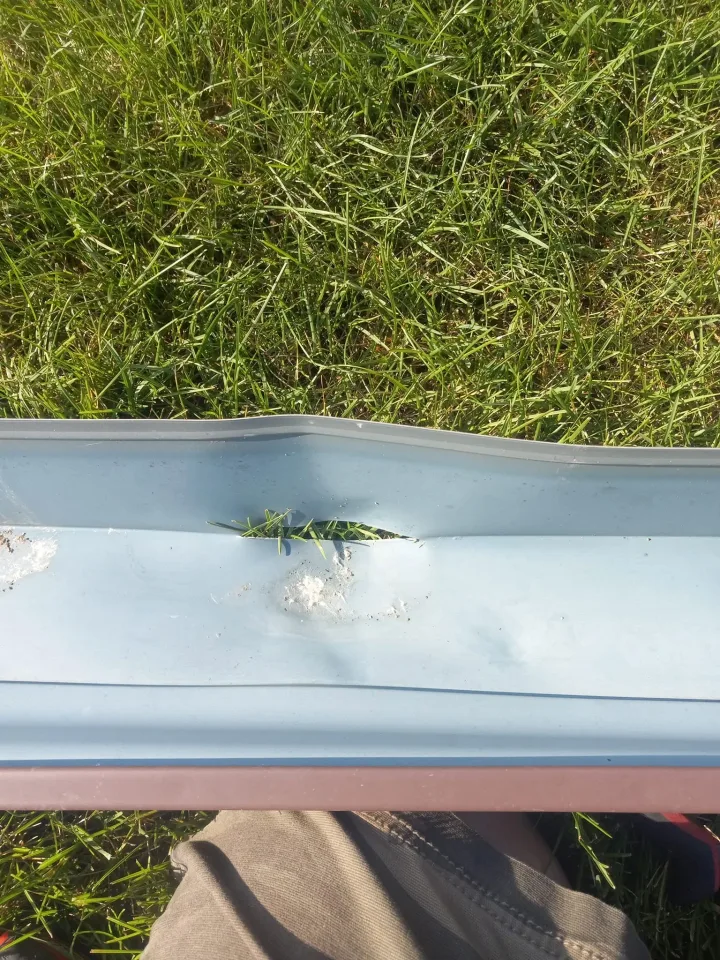
That patch was somebody’s earlier repair. It is a reasonable short term move. What it does not change is that the metal around it is the same age and thickness.
Repair or replace
Worth repairing: an isolated pinhole or seam weep on a run that is otherwise sound, correctly pitched and firmly attached, where the surrounding metal still looks healthy. Clear it, dry it, seal it properly from the inside, and correct the low spot that caused the pool.
The low spot is the part that gets skipped. Seal the hole and leave the pool, and you have moved the problem rather than solved it.
Not worth repairing: a run that has been patched more than once, visible pitting along its length, or several drips at different points. Those are all the same message, which is that the metal has reached the end of its service life.
What replacement looks like
If a section needs replacing, we form seamless 5 inch and 6 inch K style on site in over 20 colors, so a new section matches the profile and color of what is already there rather than reading as a patch. Older or unusual profiles are harder to match exactly, and we will say so before starting.
Every installation carries a 1 year written warranty covering leaks and any area of the gutter that fails from how it was installed.
Estimates are free, with a $250 minimum on any job. Because that minimum covers getting a crew and equipment out, it is worth having every small fault looked at on the same visit.
Related gutter problems
See every gutter problem we cover Gutter Repair Gutter Cleaning
Want somebody to actually look at it?
Free estimate, no pressure, and a straight answer on whether it is a small fix or a bigger job. $250 minimum on any job. Serving Omaha and the surrounding metro.